

By Hrituraj Mishra
Three years after October 7, 2023: a look at how the fight over what happened became a war of its own.
The morning of October 7, 2023 began the way it always does in a conflict that has run for decades: with rockets. Then came the sound of motorcycles and pickup trucks crossing a border fence, and within hours, the killing and abduction of civilians on a scale Israel had not experienced in this form in its history. But something else happened almost at the same time, something that has outlasted the gunfire by three years and counting. A second battle opened up, fought not with rifles or rockets but with phone cameras, hashtags, screenshots and competing claims about what the first battle had actually looked like. Three years later, that second battle still has not ended.
This is where October 7 offers a lesson that reaches far beyond the Israel-Gaza conflict itself. Modern warfare is no longer fought only over territory. It is also fought over perception, and that second front rarely gets a ceasefire of its own.The facts of the attack itself are no longer resting on early, chaotic wartime reporting alone. The United Nations Independent International Commission of Inquiry on the Occupied Palestinian Territory, including East Jerusalem, and Israel, examined the events in detail and concluded that Hamas’s military wing and other Palestinian armed groups carried out a coordinated, premeditated assault on southern Israel.
The commission found that civilians were deliberately targeted, that people were killed and injured in their homes and at a music festival, and that hostages were taken back into Gaza. It went on to conclude that the attacks amounted to war crimes. These are not contested talking points any more. They are findings.
That matters, because the information war began almost before the first one had ended.
A flood no one could filter in time
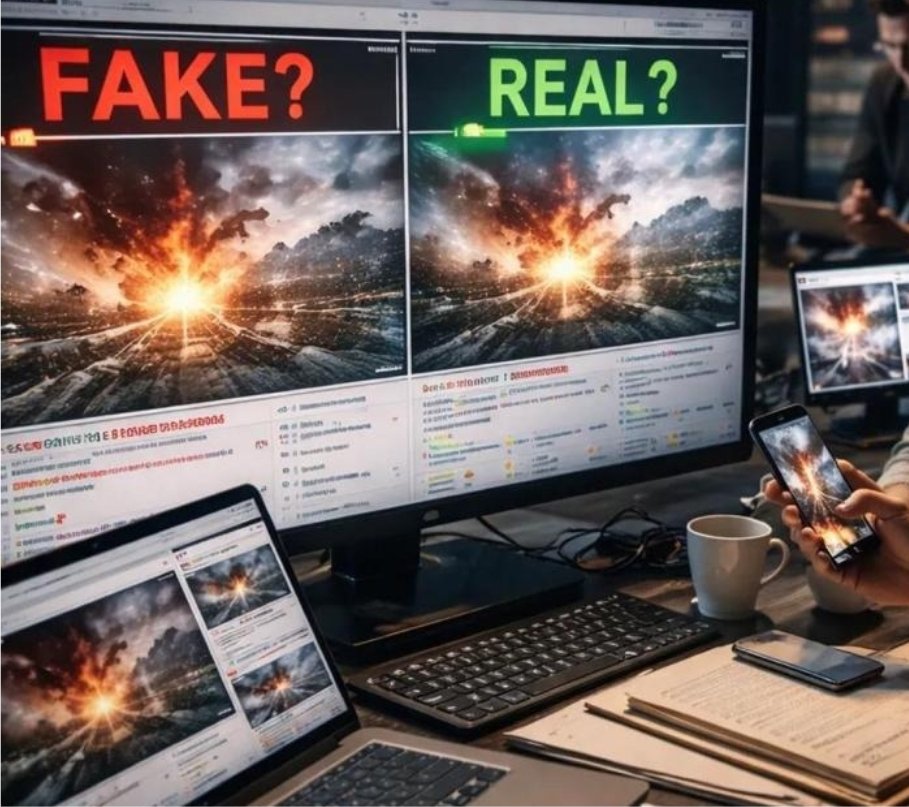
On October 7 itself, and for days afterward, millions of people reached for their phones before they reached for a news channel. What they found was not a clean stream of verified footage but a flood: genuine video sitting next to old clips, manipulated material, miscaptioned images and content that had nothing to do with the war at all, dressed up to look like it did. The Center for Strategic and International Studies later documented specific examples of this, including footage lifted from the video game Arma 3 and circulated as if it were real combat, and a video of fireworks in Algeria that was relabelled and passed off as an Israeli airstrike. The Associated Press ran its own fact-checks and found much the same pattern: recycled videos from other conflicts, fabricated claims, and captions written to make an old image mean something new.
None of this came from one side of the conflict. That is the part people tend to forget once they have picked a side of their own.
Posts circulated that tried to minimise or outright deny Hamas’s responsibility for what happened on October 7. At the same time, other posts invented or exaggerated claims about Israeli conduct, stretching a real and serious set of allegations into something cruder and easier to share. The Reuters Institute, tracking coverage of the war in its early weeks, noted that misinformation was moving through partisan accounts on every side, and that even established, well-resourced newsrooms struggled to verify what was true before it had already been shared a million times over.
A video did not need to be verified to become influential. A photograph did not need to be from October 7 to collect millions of views.
That is really the core of what made this moment different from information wars that came before it. Once an audience had accepted an emotionally powerful claim, a correction published days later rarely caught up with it. The lie, or the mistake, or the out-of-context clip, had already done its work by the time anyone got around to checking it.
Fiction that saw it coming
What makes October 7 worth studying as a strategic communication case, rather than only as a tragedy, is how much of this had already been rehearsed in fiction before it happened in fact.
The Israeli series Fauda, which follows an undercover counter-terrorism unit moving between Israeli and Palestinian society, had spent years dramatising this exact conflict through the lens of intelligence work and asymmetric warfare. After October 7, its creators found that reality had overtaken the show they were making. The programme’s fifth season, released in 2026, folds the events of October 7 directly into its story, with two episodes built around the day itself. The people behind the show have said plainly that they could not simply carry on writing the series as though the attack had never happened.
There is a stranger, more uncomfortable connection sitting underneath that one.
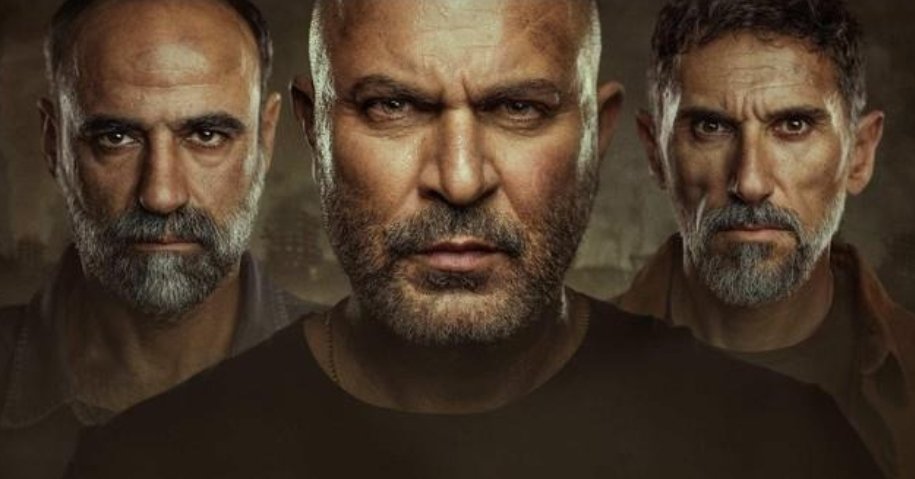
In 2022, a year before the attack, the Hamas-linked broadcaster Al-Aqsa TV aired a fictional series called Fist of the Free, made partly as a direct answer to Fauda. The show depicted a planned Palestinian assault on Israeli military positions, a breach of the border fence, and the capture of Israeli soldiers. After October 7, people noticed the overlap between scenes in that series and elements of the actual attack, and the comparison spread quickly online.
It is worth being precise about what that overlap does and does not prove. A television drama is not intelligence evidence, and treating it as a literal blueprint for the attack overstates what fiction can tell us. What the comparison does show, more defensibly, is that both sides of this conflict had already understood, well before October 7, that television and storytelling were tools for shaping how the conflict would be understood, not just fought.
Hamas’s own media operation reflected that understanding long before the attack. It was never simply reporting events as they happened. It was building a particular interpretation of the conflict, one episode and one broadcast at a time. The producers behind Fist of the Free were open about this: the series was conceived, in their own description, as an attempt to present a Palestinian perspective and to counter the narrative influence of Fauda.
Controlling the first version of the story
After October 7, that same instinct simply moved onto a faster, more chaotic platform. Every party to the conflict understood something that strategic communication students learn early: the first version of a story to reach an audience shapes how every later version of that story is received, corrected or ignored. Get there first, and you do not need to win the argument. You only need to set the terms of it.
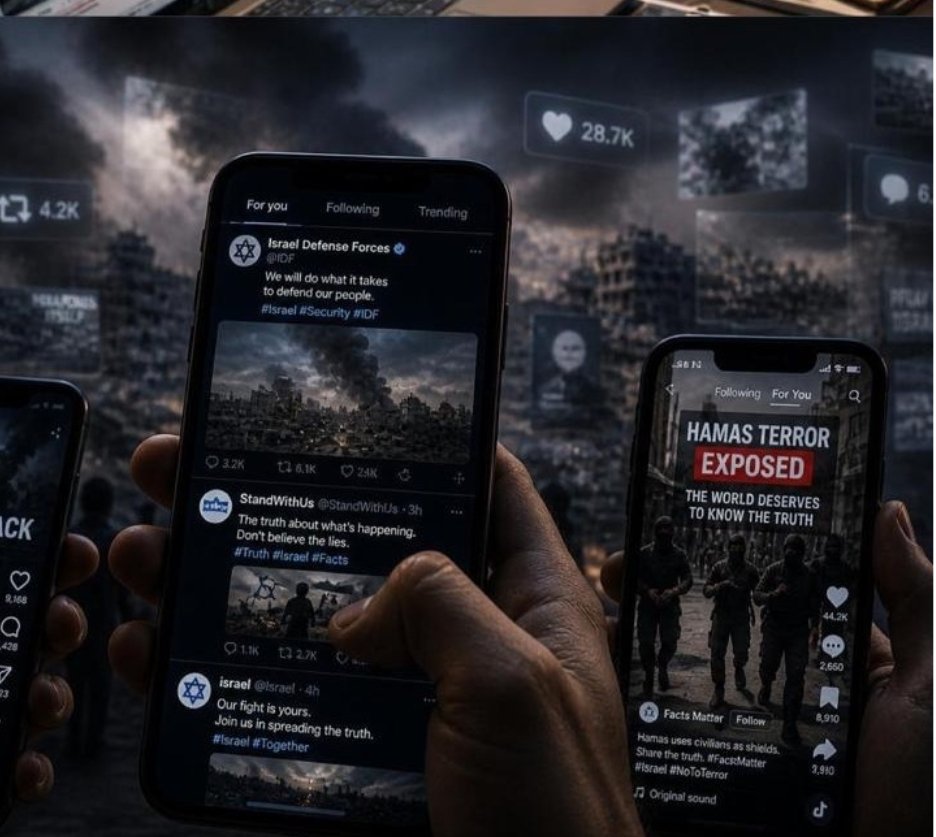
This is precisely why journalists covering modern conflict carry a heavier responsibility than they did a generation ago. Being first used to be the whole game. It no longer is. Verification itself has become part of the battlefield, and a newsroom that publishes an unverified claim is not a neutral bystander in that fight. It is, whether it intends to be or not, a participant.
The October 7 attack also makes it necessary to hold two separate ideas at once, something that the loudest voices on social media are rarely willing to do. Israel’s subsequent military conduct in Gaza has itself drawn serious allegations, international investigations and intense, ongoing debate. Those questions deserve to be investigated and reported on their own terms, independently and without flinching. But documenting alleged Israeli violations does not require denying or minimising Hamas’s crimes on October 7. And acknowledging Hamas’s responsibility for that attack does not, in turn, remove anyone’s obligation to scrutinise what Israel did afterwards. Treating these as a package deal, where accepting one fact obliges you to reject the other, is itself a piece of the information war, just a quieter one.
A battlefield that never really closes
Three years on, the lesson of October 7 is bigger than the events of one morning in southern Israel, as devastating as that morning was.
The first battle was fought with rockets, rifles and motorcycles crossing a fence line. The second has been fought ever since across television screens, newsroom desks and social media feeds, and shows no sign of a ceasefire of its own. In that second battle, the weapon was rarely a missile. More often it was a photograph stripped of its context, a video borrowed from a different war entirely, a caption written to mislead, a fact chosen because it was convenient rather than because it was complete, or simply a claim repeated often enough that repetition began to look like proof.
Inthe age of information warfare, the fighting does not stop when the shooting does. It continues for as long as people are still deciding what happened, who was responsible for it, and what the world will choose to remember. On October 7, and in the three years since, that decision has never really belonged to the battlefield alone.