By Hrituraj Mishra
Some cities hand you their landmarks on the first afternoon. Others take a few days and then quietly let you in. St. Petersburg is the second kind.
I arrived as a first time international traveller from India, which meant everything was working on me at once: the imperial facades, the wide clean roads, the canals cutting through the middle of it all. The impression was immediate: a city built over centuries and still very much lived in.
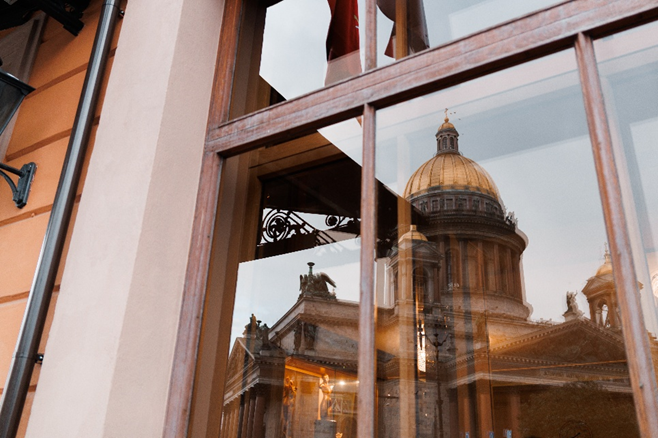
My first real look at it came from outside the Angleterre Hotel, where we stayed for the first half of the trip, with St. Isaac’s Cathedral standing right across from the entrance. Step out of the door and the city is simply there. Supermarkets, restaurants, public squares, half a dozen landmarks, all close enough to reach on foot.
September helped. Coming from India, the coolness was a relief rather than a problem, and although it rained on and off, I could stay outdoors for hours without thinking about it. Walking around, the city kept reminding me of other places: Paris in the facades, Vienna in the grandeur, Venice in the way the water is threaded through everything, and yet it never stopped feeling completely Russian.
But architecture alone doesn’t explain St. Petersburg. The city turns up in palaces and cathedrals, in museums and concert halls, on a boat at midnight, at a restaurant table, and in a two minute conversation with someone who doesn’t speak your language. I was travelling with journalists, bloggers, influencers and tourism and business representatives from several countries, so I met the city not only as a visitor but through everyone else’s reactions to it as well.
Peterhof: water, gold and a very old piece of engineering
Peterhof: water, gold and a very old piece of engineering
If you want the imperial version of St. Petersburg in one visit, Peterhof is it. The former summer residence of the tsars sits outside the city and pulls palaces, gardens, fountains and waterways into a single landscape that feels designed for spectacle as much as for living in.
Peter the Great founded it in the early eighteenth century, with construction of the residence beginning in 1714. The Grand Palace, the Upper Garden and the Lower Park grew into an ensemble modelled on the great European royal residences, formally opened in 1723 and expanded by the rulers who followed.
What catches your eye first is how the palace, gardens and fountains are locked together. The Grand Cascade sits at the centre of it, running down towards the Sea Canal and the Gulf of Finland. There are now more than 150 fountains and four major cascades across the parks, and most of the system still works on gravity rather than pumps. The drop between the water sources and the fountains creates all the pressure it needs. A three hundred year old idea, still performing every morning.
Walking the grounds, it becomes obvious this was never meant to be just a palace. The avenues, sculptures and fountains are arranged so that a new view opens every few steps. The Lower Park alone covers more than 100 hectares and holds around 150 fountains, which is the kind of scale photographs flatten completely.
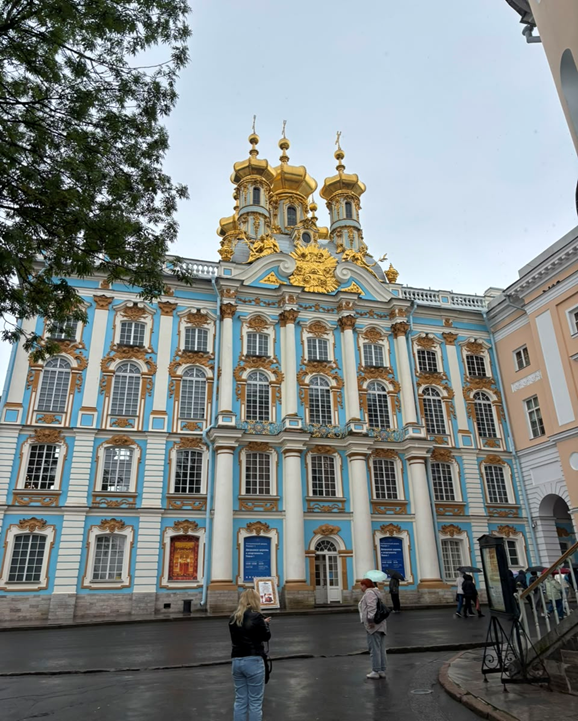
For an Indian traveller seeing a European imperial landscape for the first time, the point isn’t ticking off a famous name. It’s watching how architecture, water, sculpture and landscape were made to work as one environment.
There’s a harder story underneath the gold, too. Peterhof was badly damaged during the Second World War, including its parks and fountain system. Restoration began after the area was liberated, and bringing the fountains back was central to bringing the whole ensemble back. What you walk through today isn’t only a preserved residence. It is decades of rebuilding.
History in the middle of the modern city
Back in the centre, that same history stops being a day trip and becomes the street you’re standing on.
Palace Square was the first place that stopped me. The Winter Palace on one side, the long curve of the General Staff Building on the other, the Alexander Column holding the centre. You cannot take it in with one look. The square came together over nearly nine decades and went on to host some of the defining moments of Russian history, including the revolutions of 1905 and 1917.
The Winter Palace is now the main building of the State Hermitage Museum, founded by Catherine the Great in 1764 and today holding millions of objects across periods and cultures. The present palace took shape in the eighteenth century under the architect Bartolomeo Rastrelli, survived fire, revolution and war, and its interiors were brought back through successive restoration campaigns.
The thing I kept noticing was how the landmarks refuse to stand alone. Palace Square, the Admiralty, St. Isaac’s and the embankments along the Neva read as one continuous stretch of architecture rather than separate attractions.
There’s something familiar in that, oddly. In India, historic cities tell their stories through forts, temples, old quarters and palaces layered across eras. Here it’s enormous squares, monumental avenues and a river. The vocabulary is different; the habit of carrying history in the architecture is not.
What stayed with me most wasn’t any single monument but the walking between them: a palace square to the river, an ornate cathedral to a quiet embankment, a busy street into an empty architectural corner, all in ten minutes.
Where the city actually started
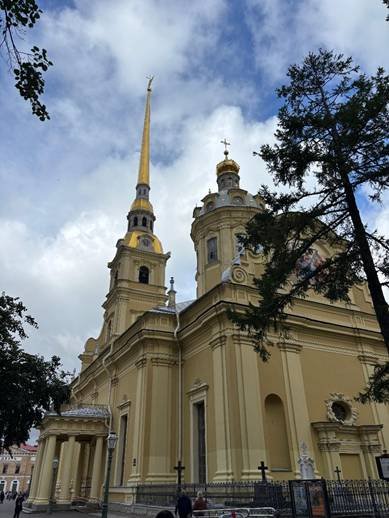
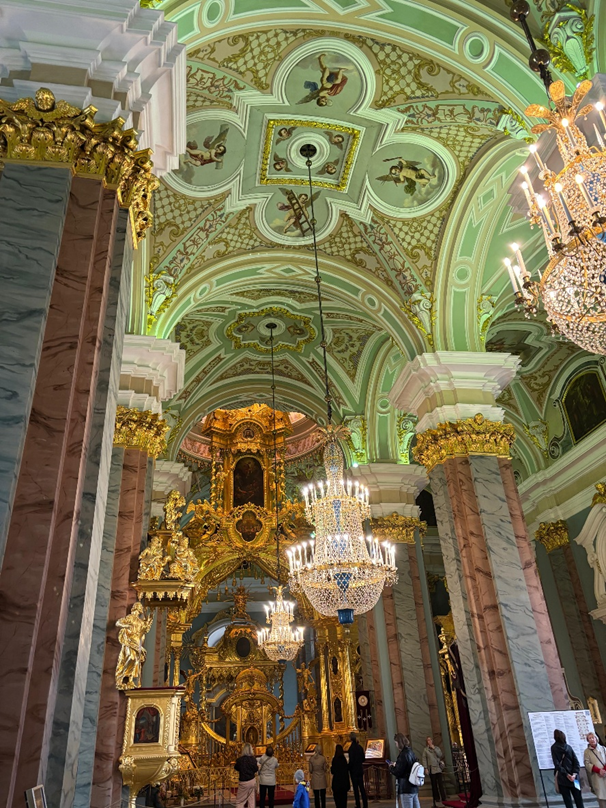
The Peter and Paul Fortress, on Zayachy Island at the mouth of the Neva, is where St. Petersburg begins. Peter the Great founded it on 27 May 1703, the date the city still counts as its birthday. Its landmark is the Peter and Paul Cathedral, whose golden spire has become shorthand for the whole city, and which holds the graves of most of the Romanov emperors and empresses.
What I found interesting is how little it stayed a fortress. Over the centuries the complex took in military facilities, government buildings and a prison for political detainees. Today it works as a museum complex where several layers of the city’s past sit inside the same walls.
And then there’s the Neva. You cannot separate the water from this city. The river, the islands, the canals, the embankments and the bridges decide how it looks and how it is experienced.
The city changes after dark
I understood the water properly on a night boat ride.
The boat had indoor seating and an open upper deck, and I spent almost the whole trip outside, watching the city slide past with people from our group and from several other countries. It was cool, it rained a little, and somehow that made it better.
From the river everything rearranges. Buildings that had felt overwhelming from the pavement become part of a panorama. Lit facades, reflections, the outlines of bridges, a different city altogether.
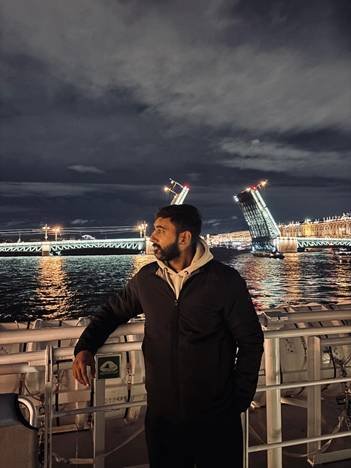
Then the bridges opened.
The drawbridges aren’t a show put on for tourists. They’re working infrastructure, lifting to let large vessels through during the navigation season, and the city’s tourism and transport authorities still describe them in 2026 as part of both its transport system and its identity.
Watching the Palace Bridge rise from the middle of the river while standing on a moving boat is one of those things a camera records but cannot reproduce. The whole structure separates and lifts while the city keeps glowing behind it. That bridge has connected the Winter Palace side to Vasilyevsky Island for more than a century.
It was the best hour of my trip, and I say that surrounded by strangers from different countries all reacting to the same thing at the same moment.
It also changed how I read the city. By day, St. Petersburg can feel like an open air museum of palaces and churches. At night the river takes over. Quieter, more atmospheric, with the bridges as the performance. The city has leaned into that with its annual “Singing Bridges” programme, where the Palace Bridge opens to symphonic music and, on some nights, themed lighting. The 2026 edition runs from May through September.
The people behind the postcards
Buildings get you to a city. Small interactions are what you still have months later.
Russian is the language of daily life here, and outside the big hotels, museums and places that deal with tourists, English isn’t a safe assumption. My solution was simple: my phone joined the conversation.
I used Yandex Translate constantly, and often the person I was speaking to pulled out their own translation app. What could have been an awkward dead end usually turned into something easy: a few words, a screen turned around, a smile, a bit of patience.
Once I was hunting for a supermarket. Another time I was trying to find an ushanka at a sensible price. Nobody just pointed vaguely and walked off. People stopped, worked out what I actually wanted and told me where to go, with a kind of enthusiasm about making sure I got the most out of the city.
Those were short exchanges, but they shifted the whole texture of the trip. I wasn’t observing St. Petersburg from behind glass any more. I was asking questions, getting things wrong, getting help.
The practical lesson for anyone travelling from India: a language barrier is not automatically a communication barrier. Carry a translation app, learn a handful of Russian words, and keep your destination saved in Russian on your phone. Current travel guidance says much the same, particularly once you move away from the main tourist establishments.
There was humour in it too. Translations came out sideways, gestures did the work words couldn’t, and sometimes both of us just laughed at the process.
And honestly, it felt familiar. In India, asking for directions can turn into a committee meeting, with three people debating the route and a fourth suggesting a restaurant you didn’t ask about. I found echoes of that same instinct here.
Russian food, one meal at a time
Before this trip, Russian cuisine was more or less a blank for me. By the end, meals had become one of the main ways I understood the city.
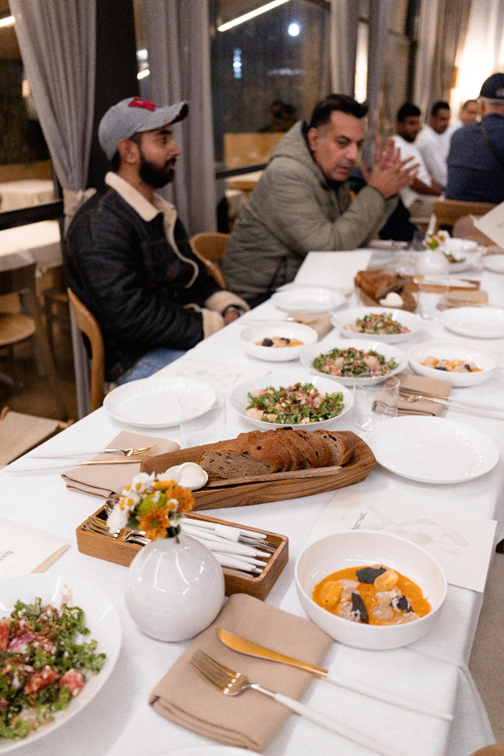
Our itinerary moved between quite different places rather than one version of Russian food. The first dinner was at Shalyapin, then lunch at Khleb Sol and dinner at Harvest; another day brought lunch at Vokzal 1853, and the day after that, lunch at Italy. Some meals went straight at Russian culinary tradition; others showed the contemporary, international side of the city.
That mixture isn’t accidental. According to the city’s official St. Petersburg Cuisine project, the local gastronomic tradition grew out of an exchange between Russian cooking and French influence, with contributions from other cultures along the way. It is the food history of an imperial port, basically. At Shalyapin, for instance, the menu reads as a modern take on Russian and European cooking, with dishes like pelmeni, pike cutlets, forshmak and stuffed carp.
What I enjoyed most was simply eating things I hadn’t grown up with. I tried chicken, fish and vegetarian preparations across the trip. I don’t eat beef, and that never once made a meal difficult. Fish turned out to be my favourite, which surprised me.
Coming from India, where food leans hard on spice and regional character, the flavours here felt more restrained, and that restraint let the ingredients speak. Soups, breads, dumplings, fish; by day three they had stopped being unfamiliar.
The city takes this seriously. Its tourism authorities highlight local dishes such as Leningrad style rassolnik, Pozharsky cutlets, smelt and traditional St. Petersburg breakfasts, and UNESCO has designated St. Petersburg a Creative City of Gastronomy.
Vokzal 1853 worked differently again: a food hall rather than a restaurant, several cuisines under one roof, which is useful when you want to taste widely without booking five tables.
Food never felt like a break from the trip. A restaurant is a place to watch how people eat, how dishes are presented, how old recipes get reinterpreted. And the social side was recognisable: like India, Russia treats a shared meal as something more than refuelling.
My suggestion for Indian travellers is short. Don’t retreat into familiar international food. Order the local dishes at least a few times. Not knowing exactly what is about to arrive is half the pleasure.
Hospitality that became part of the trip
A familiarisation trip isn’t only about the itinerary. It’s also about how a place receives you, and that turned out to be one of the quieter highlights.
The first half of the stay was at the Angleterre Hotel on St. Isaac’s Square, directly opposite the cathedral. The location did most of the work. Restaurants, shops, supermarkets and several landmarks within walking distance, so the streets around the hotel became part of my routine rather than something I had to plan for. The hotel describes itself as being in the heart of the city, with rooms looking towards St. Isaac’s and the historic centre.
The second half was at the Grand Hotel Europe on Mikhailovskaya Street, close to Nevsky Prospekt and several of the city’s major cultural institutions. The property has been part of St. Petersburg’s social and cultural life for more than 145 years, by its own account.
But what I actually remember isn’t a room specification. At the Grand Hotel Europe there was a handwritten welcome letter waiting for me, along with chocolates and a small bottle of perfume. A small gesture, except that after two flights and a first arrival in an unfamiliar country, small gestures land hard.
Staff at both hotels were warm and attentive in a way that felt like being looked after rather than processed. When you’re travelling internationally for the first time, that difference is not subtle.
The tourism team hosting our group carried the same tone through the whole programme. Meals, sightseeing, cultural events all arranged so that participants from different countries experienced them together. Conversations over those meals were often as interesting as the places we’d just visited.
A city that performs
If the architecture tells you about the imperial past, the concert halls tell you the city is still going.
One of the best evenings of the trip was at the St. Petersburg Academic Philharmonia named after D. D. Shostakovich. I attended a performance from the programme All Piano Concertos by Sergei Rachmaninoff in the Grand Hall. The first evening of the two-part programme took place on 9 September 2026, with the St. Petersburg State Academic Symphony Orchestra under Alexander Titov and pianists Nikolai Mazhara, Miroslav Kultyshev and Alexander Kashpurin, performing the First, Fourth and Second Piano Concertos.
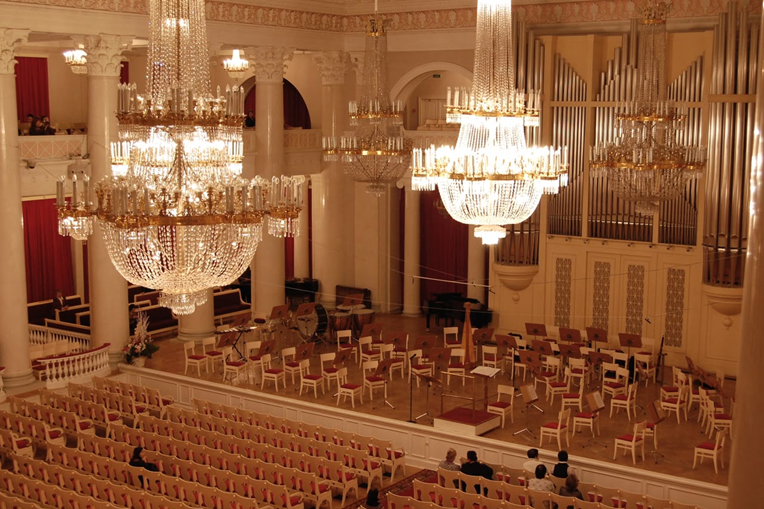
I am not a classical music expert, and it didn’t matter. Sitting in that hall, listening to one of Russia’s most celebrated composers played by a Russian orchestra in front of a Russian audience, was the most distinctly St. Petersburg hour of the trip.
It also changed how I thought about the city’s relationship with culture. Music here isn’t an add-on to a tourist itinerary. Concert halls, theatres and museums are part of how the place understands itself.
The programme included other cultural experiences too. Museums gave us the history through objects and preserved rooms; performances gave us the present tense. One of the more unexpected stops was Futurione Emotions, an immersive evening programme, and after several days of buildings that are centuries old, walking into a contemporary immersive space was a useful correction. This city is not frozen in its imperial past.
That contrast kept repeating. In a single day you can stand in a square from the Russian Empire, eat a local dish at lunch and end up inside a modern performance after dark.
So my advice is to leave gaps in the itinerary for culture instead of packing every hour with sightseeing. Monuments will tell you about a city. Its music will tell you more.
Before you fly: what Indian travellers should know
A beautiful destination is one thing. Knowing how to move through it is another. A little preparation goes a long way here.
The e-visa
The Russian e-visa process was straightforward for me and mine came through in about four days. Russia’s official unified e-visa portal states that eligible foreign nationals can apply online without an invitation or a consular visit, and that an e-visa is issued within no more than four calendar days. Rules change, so always check the official portal for what applies at the time of your travel. Apply early rather than late, and keep the approval accessible on your phone with a printout as backup.
Money: carry cash
I exchanged rupees for rubles before leaving India and carried cash. Since accommodation and meals were covered by the familiarisation programme, my money went on souvenirs and personal purchases, and having rubles meant I never had a problem. Independent travellers should check payment arrangements before departure rather than assume anything; the official St. Petersburg tourism portal has dedicated information on payments and currency alongside transport, hotels and restaurants. Carry enough for the trip, plus a little extra.
Internet and apps
My Airtel international roaming worked throughout, so I never had to rush for a local SIM. Yandex Translate handled communication, Yandex Maps handled navigation, and Yandex Taxi covered the distances that were too far to walk. Google Maps worked for me as well. Save your hotel and destination names in Russian. It makes everything easier.
Getting around
Central St. Petersburg is more walkable than I expected. From a central hotel I could reach supermarkets, restaurants and several major landmarks on foot. For longer trips there’s an extensive network of metro, buses, trams and trolleybuses, and the official tourism portal recommends the Podorozhnik transport card for frequent journeys. For taxis, app booking was far easier than flagging something down; the city’s own guidance lists services such as Yandex Go.
Language
Don’t let it put you off. Whether I was asking for directions, looking for a supermarket or hunting for ushanka, people were willing to work out what I meant. A translation app, a screenshot of your destination in Russian and a few basic words will carry you.
Weather
September was comfortable for an Indian traveller: cool, pleasant, occasional rain, and still fine for long stretches outdoors. Pack layers and keep a light waterproof jacket or umbrella with you, because the day can change on you.
Where to stay
Location mattered more than the property itself. Staying opposite St. Isaac’s Cathedral at the Angleterre, and later near the city’s cultural and commercial centre at the Grand Hotel Europe, saved me hours. For a first visit, choose the address before you fall in love with the lobby.
Food
Give Russian cuisine a real chance. I ate chicken, fish and vegetarian dishes and enjoyed the fish most. If you have dietary restrictions, say so clearly at the restaurant. I don’t eat beef and it was never an issue.
What to pack
- Comfortable walking shoes
- Light layers
- A rain jacket or compact umbrella
- Phone charger and power bank
- International roaming or another connectivity arrangement
- Translation and navigation apps
- Passport and visa documents
- Some Russian rubles
- A small day bag for sightseeing
And leave room in the suitcase. St. Petersburg has plenty worth carrying home. In my case, an ushanka.
One last thought: don’t try to control the whole trip in advance. Sort your documents, money, connectivity and navigation before you leave, then give yourself room to wander. This city rewards walking, looking up and taking the unplanned turn. My best moments weren’t on the schedule at all.
More than a destination
Every trip has a point where the sightseeing stops and the memory starts forming.
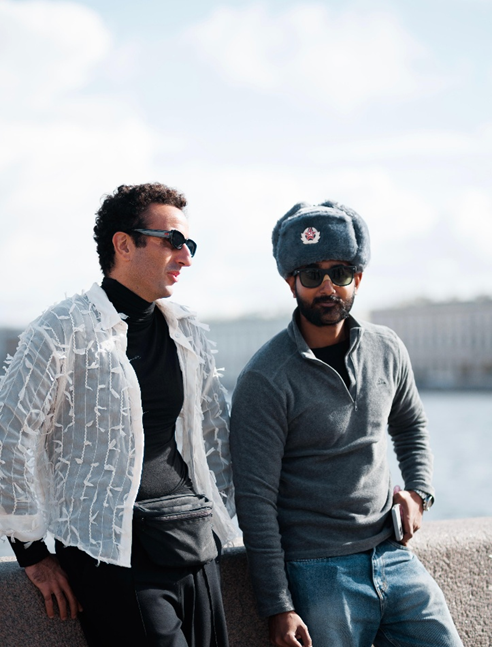
St. Petersburg will always be tied to my first international journey. At 23, leaving India for the first time and landing in a city with this much history behind it made the trip significant before the itinerary had even begun.
In a few days I saw several versions of the place: the imperial city of Peterhof and Palace Square; the older city of the Peter and Paul Fortress; the architecture around St. Isaac’s and the Church of the Savior on Spilled Blood; the city that lives along the Neva and its canals. Then the city after sunset, seen from a boat with the bridges lifting and the facades burning on the water.
And the ordinary city underneath all that: supermarkets, restaurants, people going about their day, conversations conducted partly through a phone screen, strangers taking a minute to help someone find his way.
Food added its own layer, and music added another. Sitting in the Grand Hall of the Philharmonia listening to Rachmaninoff played by a Russian orchestra was a reminder that you cannot learn this city entirely through its buildings. Some of it has to be heard.
Travelling alongside journalists, bloggers, influencers and tourism and business representatives from other countries gave it one more dimension. I was seeing St. Petersburg as an Indian visitor while constantly comparing notes with people who had arrived with completely different expectations.
St. Petersburg can be photographed endlessly, but photographs only ever get one layer. The rest comes from walking the streets, standing beside the Neva, sitting down to a local meal, listening to the music and talking to the people who live there.
I arrived as a first time international traveller. I left with St. Petersburg no longer a name on a map, but a set of streets, sounds, flavours and conversations I’ll be carrying for a long time.
For more informations, you can visit here: https://t.me/spbprav and https://vk.com/spb